History of Department of Children and Families in Florida
The history of neurologic and neurosurgical innovation at The Johns Hopkins Hospital begins with the establishment's opening in 1889. In the early on 1900s Harvey Cushing, "the father of neurosurgery," performed the first successful operations for brain tumors. In 1937 Walter Dandy performed the first aneurysm clipping.
A dedication to agreement the nervous arrangement through research and how it tin impact clinical care has defined Johns Hopkins Neurology and Neurosurgery since the very first. Our squad quickly emerged as leaders with inquiry on how the brain reacts to injury and with inventions such as the utilise of 10-rays to guide brain surgery.
A one-half-decade later on, when Johns Hopkins neurologists and neurosurgeons discovered that strokes, encephalon and nervous system disorders and injuries, present such distinct problems, that only specialized intensive care can salve patients, they pioneered the first dedicated neurological critical care unit of measurement (NCCU) in the country.

The Story of Neurology and Neurosurgery
Read about the history of neurology and neurosurgery at Johns Hopkins:
-
A History of Neurology at Johns Hopkins
Johns Hopkins Neurology: One-half a Century of Innovation vividly describes transformations in many subspecialty areas of neurology.

-
A History of Neurosurgery at Johns Hopkins
The Special Field is a history of Johns Hopkins' Department of Neurosurgery and tells the fascinating story of its touch on groundbreaking discovery and handling.

Primal Names in the History of Neurosurgery at Johns Hopkins
-
Past the time Cushing accustomed the Harvard Chair of surgery in 1912, his piece of work at Johns Hopkins had established him as the outstanding immature surgeon in the Usa. Cushing brought Halsted's meticulous surgical technique to the new field and added Osler's careful clinical ascertainment and his own penchant for authentic documentation. His clinical contributions are legendary: the use of x-rays in surgical do, physiological saline for irrigation during surgery, agreement the pituitary'south part, founding the clinical specialty of endocrinology, the anesthesia tape, the use of blood force per unit area measurement in surgical practice, and the physiological consequences of increased intracranial pressure.
One of the master inducements for Cushing to stay in Baltimore upon completion of his residency was his appointment as Director of the Hunterian Laboratory. Our concept of the clinician/scientist in medicine largely derives from Cushing's vision of the Hunterian every bit a place for young physicians to learn to practice research.
-
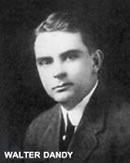 I of the earliest products of the Hunterian feel was Walter Dandy. During the two years after medical schoolhouse, Dandy completed his monumental work on cerebrospinal fluid production, judged by many to be the finest piece of surgical research e'er accomplished. While still a house officer, he devised pneumo-encephalography, which was the footing of neurological imaging for virtually l years. Bang-up went on the be the most famous surgeon of his generation and the greatest technician the field has known. His innovations introduced surgery for disc disease, surgery for aneurysms and arteriovenous malformations as well every bit surgery for functional affliction. The modern telescopic of neurosurgery was encompassed by Smashing.
 -
Bang-up'southward successor was A. Earl Walker, who established the first neurosurgery residency plan at Johns Hopkins and emphasized enquiry preparation during residency. It was his vision of the bookish neurosurgeon as a researcher that kept neurosurgery within the National Institutes of Health programs. With a few other as informed leaders, he contested the determination of organized neurosurgery to refuse government aid for research and neurosurgery causeless the important part it has continue with the NIH.
-
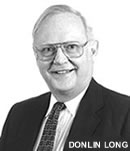 In 1973, Donlin M. Long succeeded Walker and the organization of the current program began. In 1982, the Adolf Meyer Center for Psychiatry and the Neurosciences opened. His vision helped course the philosophical ground for the amalgamation of psychiatry, neurology and Neurosurgery and the evolution of a neuroscience centre. The conceptual and practical base for neurosurgeons is no longer full general surgery, just the neurological sciences. Investigators interested in like diseases work together without regard to their specialty preparation. Most neurological diseases are better treated by teams of specialists representing all of the medical expertise the patients need than through individual departments. Neurosurgeons at present need education in related fields such as otolaryngology, neuro-ophthalmology, and orthopaedics, which are beyond the boundaries of the traditional specialty. Dr. Long'south legacy is alive and well non only at Hopkins, but in neuroscience center's of excellence worldwide.
 -
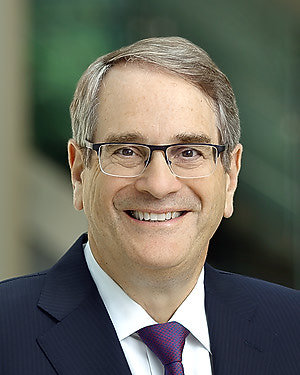 Dr. Henry Brem has recently succeeded Dr. Long equally the Chairman of Neurosurgery. He is continuing the clinician-scientist tradition that started with Cushing over 100 years ago. The department has now grown to over 30 full time faculty and approximately 4,000 surgeries are performed each yr. Neurosurgery at Hopkins remains i of the most well funded departments in the land in terms of research dollars and perennially ranks amidst the best in the country clinically. We expect the Johns Hopkins Department of Neurosurgery to continue its legacy of expert patient intendance and innovation well into the foreseeable future.
History of Neurology at Johns Hopkins
The Department of Neurology at Johns Hopkins was founded in 1969. In this remarkably short menstruation of time, the Department has go ane of the well-nigh influential in the world, and has trained a remarkable group of leaders of other departments. Much of the success is due to the energy and vision of Guy McKhann (the 1969-89 era) and his initial recruits, but the soil was prepared by a series of individuals and their often conflicting visions, dating back to the founding of The Johns Hopkins Hospital in 1889 (the first eighty years).
The Hopkins environment provided fertile ground for the growth of the Neurology Department Hopkins was the birthplace of Pediatric Neurology under Frank Ford, as well as Neuro-ophthalmology under his colleague and friend, Frank Walsh. The School of Hygiene and Public Health was home to chronic illness and stroke epidemiology nether Abraham Lillienfeld, and the basic scientific discipline departments of the School of Medicine were headed by world renowned neuroscientists Vernon Mountcastle in Physiology and David Bodian in Anatomy. The Department of Neurology thrived.
In the summer of 1969, 6 new faculty members joined the iii original members of the small segmentation of Neurology and established distinct adult and pediatric neurology inpatient units. Three new enquiry laboratories also were initiated: Neurochemistry under Guy McKhann, the Kennedy Professor and first Director of the Department of Neurology; Neurovirology and Immunology, under Richard Johnson, the Eisenhower Research Professor of Neurology; and Neuromuscular Disease nether Daniel Drachman. Over 2 decades, the size and latitude of the inpatient, outpatient, and consultation services increased chop-chop and other subspecialty groups adult with accompanying investigative piece of work. Additional research and training programs were developed in Stroke, Neuro-oncology, Neuropathology, Neuro-ophthalmology, Epilepsy, Cognitive Neuroscience, Genetics, and Neuro-intensive Care.
With departmental growth, the inpatient units, outpatient clinics, offices, and laboratories became scattered throughout the Johns Hopkins medical campuses. In 1982, the Adolph Meyer Building was opened and all the components of the section were consolidated and dedicated neurological intensive care and epilepsy monitoring units were established.
The evolution of the section continues. Additional research laboratories take been acquired to come across the needs of expanding investigative work. From the original nine members of the faculty in 1969, the section has now grown to over 70 full-fourth dimension neurological clinician-investigators.
Source: https://www.hopkinsmedicine.org/neurology_neurosurgery/about_us/history/

Post a Comment for "History of Department of Children and Families in Florida"