Barn Swallow Babies All Grown Up but Haven't Left the Nest
Barn swallows are the most widespread of all eat species — they're constitute on every continent except Antarctica — only the tiny songbirds are really threatened in Canada. The population in Canada has decreased by an estimated 76 per cent over the past 40 years.

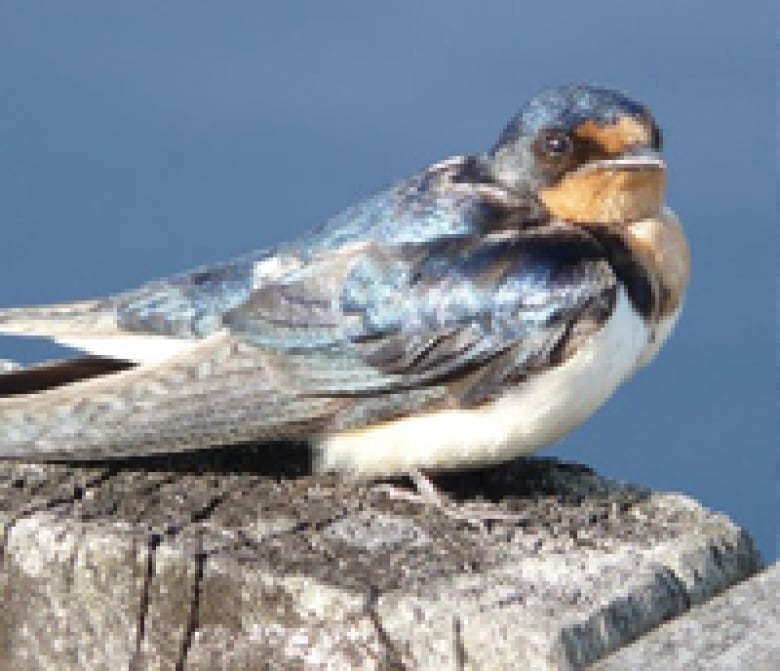
Barn swallows are the almost widespread of all consume species — they're found on every continent except Antarctica — but the tiny songbirds are actually threatened in Canada. The population in Canada has decreased by an estimated 76 per cent over the past 40 years. No one really knows why the population has declined so dramatically, but researchers attribute it to climate change, predators, lost nesting and foraging habitat and changes in insect populations. The Island Nature Trust has been co-ordinating programs ensure Islanders know about the birds and practice their all-time to protect them over the past few years — encouraging them to build nesting ledges and leaving barn doors open up for swallows to nest. Leanne Tol coordinates the Island Nature Trust's Farmland Birds Projection, and she shared some fascinating facts most barn swallows for the first in our summer series about P.E.I. wild fauna. Barn swallows are long-distant migrants who spend their winter in parts of Central and S America, and have been found as far south equally Argentina — 9,000 kilometres abroad! An developed barn swallow weighs on average 17 to 20 grams — the same as just 7 or viii pennies (recollect those?). Barn swallows build their nests with mud pellets and like to reuse nests year subsequently year. Nest edifice takes upward a lot of energy and swallows tin brand more than ane,000 trips in the process. New pairs will take over unused nest. "It is thus important to not remove old nests, even if they've been empty for a while because you never know when a new pair will come to investigate!" said Tol. Barn swallows are aerial insectivores — they catch and eat insects in the air every bit they fly. 99.8 per cent of their diet during the breeding season is flying insects. They will spend all day going dorsum and forth, feeding their young. The birds ofttimes produce two broods of four or five eggs in a year, and seventy to xc per cent volition successfully raise at to the lowest degree one young. The second family or "clutch" of eggs is usually smaller, Tol said. "We are hoping that with this project nosotros tin go a improve handle on the number of chicks that fledge for nests here on the Island," said Tol. "If the chicks go far to ten days, it is generally accustomed that they will exist successful." Young will go out the nest between xix and 24 days afterwards hatching. But they'll continue to hang around for at least a week, being fed past the parents and staying in the nest at night. "Moving out is always difficult!" jokes Tol. However, one time they leave, young are not probable to return to the site where they were raised. "Befouled swallows can act territorial around their nests, and they volition swoop and dive-flop y'all or starting time making warning calls if you're deemed a threat," said Tol. They'll target your cats and dogs besides! "From my experience it does seem like they get used to the farmers that are in and out of the buildings, and don't mind some human being action once they go used to you," she added. Befouled swallows alive on average 4 years, beginning breeding at one year old. The oldest recorded barn swallow in North America was viii years old, recaptured in Maryland in the U.s., and its historic period was likely discernable because it was banded, said Tol. Males will share the nesting building and feeding responsibilities, said Tol. Incubation is generally washed by the female, just the male does sometimes sit down on the nest too. Not sure what a befouled swallow looks like? They accept nighttime blueish backs, ruddy faces, deeply forked tails and those aforementioned aerial acrobatic skills. Even with all this data, there are withal plenty of holes in the information about P.Eastward.I. befouled swallows researchers would love to know. To give them a mitt reporting sightings and nests, contact Isle Nature Trust at landbirds@islandnaturetrust.ca. Barn swallows have new place to live along Highway 401 Toronto constabulary call for fill-in to oust birds from boathouse
1. Long style home

ii. They're lightweights
three. They recycle

iv. Eat and run
five. Double down
6. No place like abode

seven. Dive-bombers
8. Four years one-time
ix. Help from dad
Source: https://www.cbc.ca/news/canada/prince-edward-island/pei-barn-swallow-wildlife-facts-1.3637139

Post a Comment for "Barn Swallow Babies All Grown Up but Haven't Left the Nest"